 AI Damage
2019 Chevrolet Blazer: common problems
Owners of the 2019 Chevrolet Blazer filed 189 complaints with NHTSA, most often about powertrain and electrical system. The maker issued 696 service bulletins for this year. Details by component below, with sources.
Key figures
- Owner complaints
- 189
- involving a crash
- 4
- Technical service bulletins (TSB)
- 696
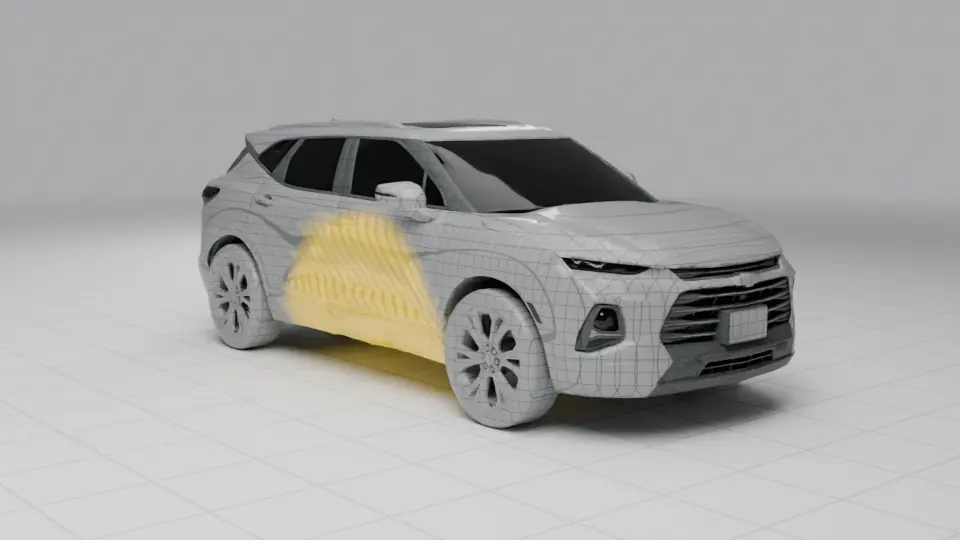
What fails most often
- 1 Powertrain 34% of all complaints
- 2 Electrical system 33% of all complaints
- 3 Engine 21% of all complaints
- 4 Steering 15% of all complaints
- 5 Service brakes 7% of all complaints
- 6 Vehicle speed control 4% of all complaints
- 7 Forward collision avoidance 3% of all complaints
- 8 Structure 2% of all complaints
- Powertrain: 64 complaints (34% of all), 1 of them with a crash reported by the owner; manufacturer bulletins for this component: 90.
- Electrical system: 62 complaints (33% of all), 1 of them with a crash reported by the owner; manufacturer bulletins for this component: 149.
- Engine: 40 complaints (21% of all); manufacturer bulletins for this component: 74.
- Steering: 28 complaints (15% of all); manufacturer bulletins for this component: 15.
- Service brakes: 14 complaints (7% of all), 2 of them with a crash reported by the owner; manufacturer bulletins for this component: 29.
Engines and transmissions
US-market versions per EPA. On the right: how many NHTSA complaints name this engine or transmission type.
- 2.5 L · petrol · 4 cyl
- 3.6 L · petrol · 6 cylnamed in 3 complaints
- automatic, 9-speed
Drive: FWD, AWD
Symptoms owners describe
How many of the 189 NHTSA complaints mention each symptom (automatic count from complaint text; one complaint can mention several).
Components owners complain about
| Component | Owner complaints | involving a crash | Technical service bulletins (TSB) |
|---|---|---|---|
| Powertrain | 64 | 1 | 90 |
| Electrical system | 62 | 1 | 149 |
| Engine | 40 | 0 | 74 |
| Steering | 28 | 0 | 15 |
| Service brakes | 14 | 2 | 29 |
| Vehicle speed control | 7 | 0 | 3 |
| Forward collision avoidance | 6 | 0 | 9 |
| Structure | 4 | 0 | 40 |
| Lane departure | 4 | 0 | 3 |
| Backover prevention | 3 | 0 | 15 |
| Air bags | 3 | 1 | 2 |
| Tires | 2 | 0 | 21 |
| Fuel/propulsion system | 2 | 0 | 5 |
| Engine and cooling | 1 | 0 | 102 |
What owners report
Short excerpts of NHTSA complaints in the original wording. These are owner statements not verified by NHTSA; personal data removed.
My vehicle sustained a lot of damage with my head striking the drivers side window --- with no air bags deploying
Without warning, the brake pedal on my 2019 Chevy Blazer became hard, almost as if the car was turned off. I was unable to stop and slowly rolled into the back of a semi stopped at a stoplight. This was moments after exiting off of a major highway and could have been much worse.
Brake failure occurred on a city street at a 3 way stop when approaching a stop sign. Brakes did not provide any stopping power and caused the vehicle to blow through stop sign and caused an accident into a drainage ditch not involving any other vehicles.
Something going on with backup camera when backing up it not always comes up on interior display monitor. The outlet in the console dc outlet not working had it looked at several times the mechanics can't figure out what the issue is all fuses are good And a few times couldn't stat the car after shift to park display…
The ac completely doesn’t work causing potential for sensitive, elderly, or young children and pets to overheat inside, it’s significant risk of injury or death from the hot summer temperatures.
Trapping water and trapped moisture has caused severe mold buildup throughout the interior, creating respiratory hazards and window fogging. This matches GM Technical Service Bulletin 23-NA-087.
The contact stated that while starting the vehicle, there was a strong odor coming from the vehicle, and no warning lights illuminated. The contact also stated that a "Shift to Park" warning message displayed while the vehicle was already in Park, requiring multiple shifting attempts to clear the message.
The transmission or torque converter has slippage and shuddering that has caused one or both to go bad. My safety was at risk due to this item beginning to fail to cause the inability to accelerate to maintain my position in traffic. The problem was recreated for the service technician.
When owners complained
NHTSA complaints by filing year. The peak shows at what age the problems show up most.
Comparison
By complaint count this model year ranks 348 of 2,102 model years in the NHTSA data (top 17% most complained about).
On average one model year of the Blazer has 92 complaints (8 years in the data). This year has 189, above average.
What to check before buying
- Powertrain. Shift quality under load, harsh shifts, transmission codes, CV joints.
- Electrical system. Scan all modules, test the battery and alternator, inspect connectors near the impact zone.
- Engine. Cold start, unusual noises, oil leaks and engine codes.
- Steering. Steering play, power assist, rack and tie rods after a wheel impact.
Manufacturer service bulletins
Bulletin titles as filed with NHTSA.
- This PI provides Diagnostics tips on how the LIN bus works and how to diagnosis it
- This preliminary information advises a dealer on how to email GDS2 session logs into Technical Assistance
- PI to help diagnose A/C concern
- This preliminary information communicates information about how to determine if a wheel and tires size…
- This Preliminary information communicates the steps on how to save a GDS2 Session Log and upload to a…
This Preliminary information communicates the steps on how to save a GDS2 Session Log and upload to a Technical Assistance Case in CX Connect.
- This Preliminary information communicates to the field on how to diagnosis a GPS issue with the Telematic…
This Preliminary information communicates to the field on how to diagnosis a GPS issue with the Telematic module with no DTC'ss
- This Preliminary information communicates to the field on how to diagnosis a GPS issue with the Telematic…
- This service bulletin provides information on Tire Sidewall Irregularities
- This service bulletin provides information on replacing the intake manifold when the engine is replaced…
This service bulletin provides information on replacing the intake manifold when the engine is replaced after severe internal engine damage.
- This Preliminary Information communication provides information to the technician about vehicles that have…
This Preliminary Information communication provides information to the technician about vehicles that have had multiple repair attempts that are being performed on customer’s vehicles that exhibit vibration conditions…
- The service bulletin advises the tech of a normal transmission shift condition and the delay in throttle…
The service bulletin advises the tech of a normal transmission shift condition and the delay in throttle response when the throttle plate is opened rapidly and advises the customer that it is normal for the delay.
- This Preliminary information communicates a possible issue with an engine timing chain, gear or crankshaft key
NHTSA lists 696 bulletins for this year; the 12 newest are shown here.
Other years of this model
Questions and answers
What are the most common problems with the 2019 Chevrolet Blazer?
Owner complaints to NHTSA most often mention: powertrain, electrical system, engine. Total complaints: 189. The most frequent symptoms in complaint texts: warning lights, check engine (19%), A/C or heater (12%), steering or power steering problems (5%).
How many service bulletins (TSB) were issued for the 2019 Chevrolet Blazer?
NHTSA lists 696 manufacturer service bulletins for this year. A bulletin tells dealers how to diagnose or fix a known issue; it is not a recall.
Should I buy a 2019 Chevrolet Blazer from a US auction?
Owner complaints describe defects, not crash damage. Before bidding, check the components listed above and review the lot photos: VinWind builds a report of visible and hidden damage by VIN.
Other 2019 models
Read also
Sources: public NHTSA data (USA): service bulletins and owner complaints; YouTube: links to videos credited to their authors. Complaints are owner statements not verified by NHTSA, and describe defects rather than crash damage. Data updated 2026-11-04.