 AI Damage
2013 Hyundai Azera: common problems
Owners of the 2013 Hyundai Azera filed 112 complaints with NHTSA, most often about steering and service brakes. Details by component below, with sources.
Key figures
- Owner complaints
- 112
- involving a crash
- 3
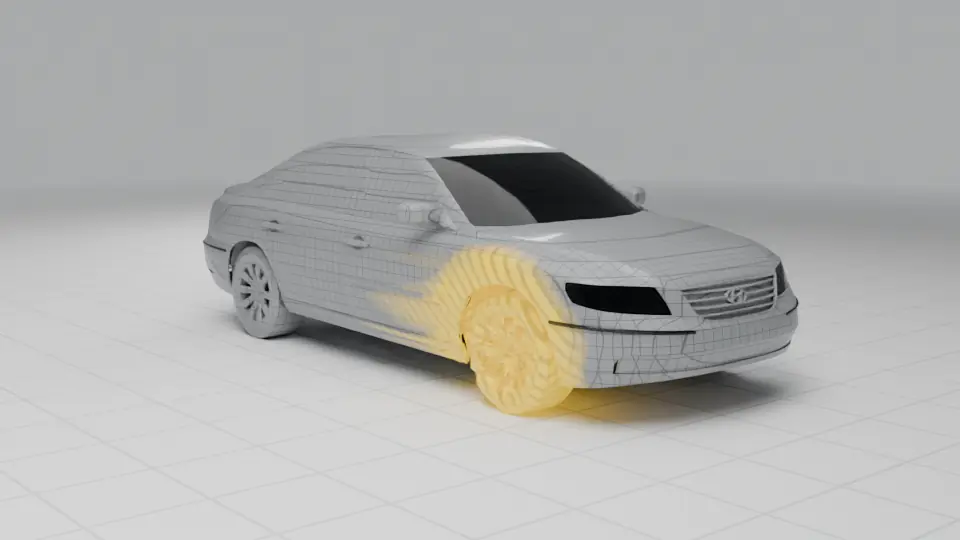
What fails most often
- 1 Steering 29% of all complaints
- 2 Service brakes 21% of all complaints
- 3 Air bags 16% of all complaints
- 4 Engine 15% of all complaints
- 5 Electrical system 13% of all complaints
- 6 Structure 8% of all complaints
- 7 Fuel/propulsion system 4% of all complaints
- 8 Electronic stability control 3% of all complaints
- Steering: 33 complaints (29% of all), 1 of them with a crash reported by the owner.
- Service brakes: 24 complaints (21% of all).
- Air bags: 18 complaints (16% of all), 2 of them with a crash reported by the owner.
- Engine: 17 complaints (15% of all).
- Electrical system: 14 complaints (13% of all).
Engines and transmissions
US-market versions per EPA. On the right: how many NHTSA complaints name this engine or transmission type.
- 3.3 L · petrol · 6 cylnamed in 2 complaints
- automatic, 6-speed
Drive: FWD
Symptoms owners describe
How many of the 112 NHTSA complaints mention each symptom (automatic count from complaint text; one complaint can mention several).
Components owners complain about
| Component | Owner complaints | involving a crash | Technical service bulletins (TSB) |
|---|---|---|---|
| Steering | 33 | 1 | 0 |
| Service brakes | 24 | 0 | 0 |
| Air bags | 18 | 2 | 0 |
| Engine | 17 | 0 | 0 |
| Electrical system | 14 | 0 | 0 |
| Structure | 9 | 0 | 0 |
| Fuel/propulsion system | 4 | 0 | 0 |
| Electronic stability control | 3 | 0 | 0 |
| Engine and cooling | 3 | 0 | 0 |
| Powertrain | 3 | 0 | 0 |
| Suspension | 3 | 1 | 0 |
| Wheels | 3 | 1 | 0 |
| Seat belts | 2 | 0 | 0 |
| Seats | 2 | 0 | 0 |
What owners report
Short excerpts of NHTSA complaints in the original wording. These are owner statements not verified by NHTSA; personal data removed.
Consumer stated that the airbags did not deploy during auto accident. The consumer stated he and his wife were struck by another vehicle on the right front door. The vehicle the struck a guardrail, following it for 50ft. The vehicle was totaled. The consumer's wife was knocked unconscious and endured.
The air bags did not deploy. The driver sustained injuries to the left knee, left arm, shoulder, and face. The front passenger sustained chest and right arm injuries. Medical attention was received. The vehicle was towed away. A police report was filed. The cause of the failure was not determined.
The contact stated while driving at various speeds, the vehicle was shuddering and then stalled. The check engine warning light was illuminated. The vehicle was taken to Auto Zone, where it was diagnosed and determined that the spark plugs, and ignition coils needed to be replaced.
Vehicle started having overheating issues around August 2024, took it to mechanics to get it looked at and tried various fixes, concluding in a blown head gasket.
The Car started to emit Smoke while Driving on highway. All the feature indicate that the issue is purely related to the recall but the Hyndai took in the vehicle and gave me a decision that the engine failure is not related to recall. Said that the recall has been completed.
The contact stated that while driving at an undisclosed speed, the MIL warning light illuminated. The contact stated that the diagnostic test and recall repair appointment was scheduled. The manufacturer was made aware of the failure and a case was filed. The failure mileage was approximately 65,000.
I like to report that this vehicle developed moisture inside the head lamps and it has inside a silver/ look like tent foil spread all over. At nigh we canât see the road. We replaced the light ð¡ and bought the most brighter once $109.@ and we still canât see at night. It is a safety issue since we can see.
Since day 1 it has overheating issue. Within the first 2 wks of ownership, we replaced the radiator cap, thermostat, and had engine checked for leaks at Pep Boys. Replacing the water pump was next. On the night of [XXX] we replaced the water pump.
When owners complained
NHTSA complaints by filing year. The peak shows at what age the problems show up most.
Comparison
By complaint count this model year ranks 3,305 of 36,656 model years in the NHTSA data (top 9% most complained about).
On average one model year of the Azera has 59 complaints (12 years in the data). This year has 112, above average.
What to check before buying
- Steering. Steering play, power assist, rack and tie rods after a wheel impact.
- Service brakes. Pedal feel, ABS operation, leaks, discs and hoses.
- Air bags. Check the SRS light, stored codes and airbag/curtain status after any impact.
- Engine. Cold start, unusual noises, oil leaks and engine codes.
Other years of this model
Questions and answers
What are the most common problems with the 2013 Hyundai Azera?
Owner complaints to NHTSA most often mention: steering, service brakes, air bags. Total complaints: 112. The most frequent symptoms in complaint texts: knocking, grinding or other noise (23%), warning lights, check engine (19%), vibration (12%).
How many service bulletins (TSB) were issued for the 2013 Hyundai Azera?
NHTSA lists 0 manufacturer service bulletins for this year. A bulletin tells dealers how to diagnose or fix a known issue; it is not a recall.
Should I buy a 2013 Hyundai Azera from a US auction?
Owner complaints describe defects, not crash damage. Before bidding, check the components listed above and review the lot photos: VinWind builds a report of visible and hidden damage by VIN.
Other 2013 models
Read also
Sources: public NHTSA data (USA): service bulletins and owner complaints; YouTube: links to videos credited to their authors. Complaints are owner statements not verified by NHTSA, and describe defects rather than crash damage. Data updated 2026-11-05.