 AI Damage
2017 Toyota Prius: common problems
Owners of the 2017 Toyota Prius filed 91 complaints with NHTSA, most often about visibility and service brakes. The maker issued 126 service bulletins for this year. Details by component below, with sources.
Key figures
- Owner complaints
- 91
- involving a crash
- 12
- Technical service bulletins (TSB)
- 126
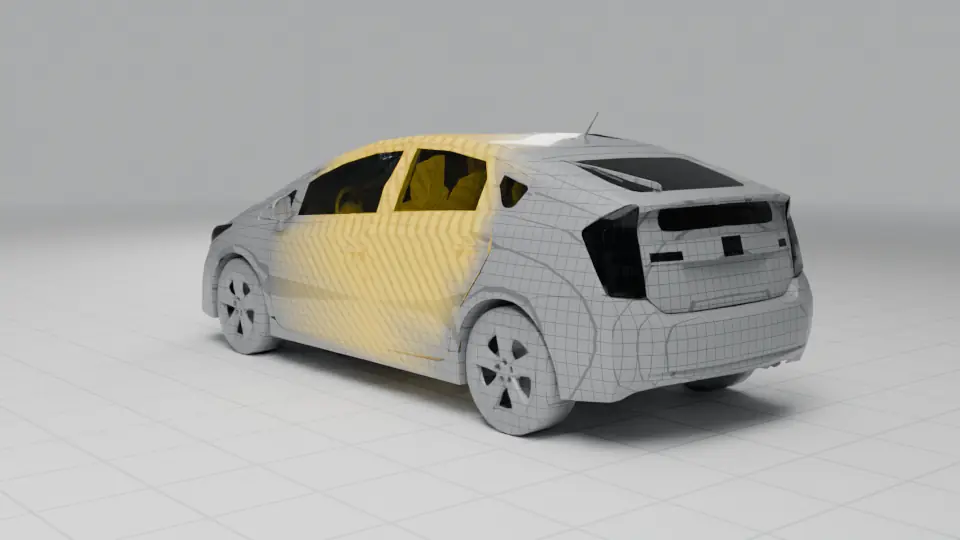
What fails most often
- 1 Visibility 19% of all complaints
- 2 Service brakes 15% of all complaints
- 3 Vehicle speed control 14% of all complaints
- 4 Engine 13% of all complaints
- 5 Fuel/propulsion system 13% of all complaints
- 6 Electrical system 12% of all complaints
- 7 Structure 8% of all complaints
- 8 Steering 8% of all complaints
- Visibility: 17 complaints (19% of all); manufacturer bulletins for this component: 2.
- Service brakes: 14 complaints (15% of all), 4 of them with a crash reported by the owner; manufacturer bulletins for this component: 4.
- Vehicle speed control: 13 complaints (14% of all), 5 of them with a crash reported by the owner; manufacturer bulletins for this component: 2.
- Engine: 12 complaints (13% of all); manufacturer bulletins for this component: 7.
- Fuel/propulsion system: 12 complaints (13% of all).
Engines and transmissions
US-market versions per EPA. On the right: how many NHTSA complaints name this engine or transmission type.
- 1.8 L · hybrid · 4 cyl
- CVT
Drive: FWD
Symptoms owners describe
How many of the 91 NHTSA complaints mention each symptom (automatic count from complaint text; one complaint can mention several).
Components owners complain about
| Component | Owner complaints | involving a crash | Technical service bulletins (TSB) |
|---|---|---|---|
| Visibility | 17 | 0 | 2 |
| Service brakes | 14 | 4 | 4 |
| Vehicle speed control | 13 | 5 | 2 |
| Engine | 12 | 0 | 7 |
| Fuel/propulsion system | 12 | 0 | 0 |
| Electrical system | 11 | 0 | 38 |
| Structure | 7 | 3 | 28 |
| Steering | 7 | 1 | 1 |
| Wheels | 4 | 1 | 1 |
| Powertrain | 4 | 0 | 0 |
| Air bags | 3 | 3 | 6 |
| Seats | 3 | 0 | 2 |
| Exterior lighting | 2 | 0 | 0 |
| Engine and cooling | 1 | 0 | 6 |
What owners report
Short excerpts of NHTSA complaints in the original wording. These are owner statements not verified by NHTSA; personal data removed.
Had it been seconds later, we would have had our seatbelts off and gone into the windshield. There were injuries. FYI, I have a pretty much perfect driving record and log thousands of miles each year. I had ZERO problems with the Prius I owned prior to this one. I will never drive this car again.
I had an sua (sudden unintended acceleration). I drove up an incline into the "driveway" of the holiday in in downtown san diego, pulled up into a small circular area/driveway where you can register for your room or pick up or drop off people.
The airbags did not deploy, and my wife, belted in the front passenger seat, was twisted sideways by the impact. She experienced a pelvic fracture and aggravation of her arthritic left hip joint. We believe that airbag deployment would have prevented these injuries.
Consumer writes in regards to unintended acceleration. The consumer stated the vehicle accelerated and the brakes were unresponsive resulting in a crash. The consumer was injured and required medical attention.
Tl* the contact owned a 2017 toyota prius. While driving 40 mph, the steering wheel became difficult to turn and the contact lost control. As a result, the vehicle crashed into a store. The air bags deployed. A police report was filed. There were no injuries.
Airbags did not deploy. Neither my wife (front seat passenger) nor I felt any discomfort, but a few days later she complained about pain in her waist area. She was later determined to have a fractured pelvis and a jostled left hip joint.
The air bags failed to deploy. A police report was filed. There were no injuries. The vehicle was towed to a body shop and the body damages were repaired so that the vehicle could be driven. The vehicle was taken to kalispell toyota (2845 u.s.
Symptoms included white smoke from exhaust and coolant loss with no visible ground leak. This is a documented factory defect per Toyota Technical Service Bulletin T-SB-0135-19 affecting 2016-2019 Prius models.
When owners complained
NHTSA complaints by filing year. The peak shows at what age the problems show up most.
Comparison
By complaint count this model year ranks 618 of 2,102 model years in the NHTSA data (top 29% most complained about).
On average one model year of the Prius has 37 complaints (12 years in the data). This year has 91, above average.
What to check before buying
- Visibility. Wipers, mirrors, defrosters, cracked glass.
- Service brakes. Pedal feel, ABS operation, leaks, discs and hoses.
- Vehicle speed control. Accelerator pedal, cruise control, throttle codes.
- Engine. Cold start, unusual noises, oil leaks and engine codes.
Manufacturer service bulletins
Bulletin titles as filed with NHTSA.
- OBSOLETE NOTICE August 20, 2026
This bulletin is now obsolete. Please see T-SB-0051-26.
- This bulletin includes basic procedures for performing a rescue charge at battery on high voltage (HV)…
This bulletin includes basic procedures for performing a rescue charge at battery on high voltage (HV) Ni-MH and Li-ion batteries.
- Some 2005 – 2026 Toyota vehicles that have undergone water intrusion may exhibit a condition in which a…
Some 2005 – 2026 Toyota vehicles that have undergone water intrusion may exhibit a condition in which a musty odor is present. Follow the procedures in this bulletin to remediate the odor and address this condition…
- Some customers may experience echoing on the line calling the vehicle when using Bluetooth Hands Free
This is caused by the phone Hands Free volume being too low.
- The air conditioning dye injection tool kit has been developed to aid in identifying the location of air…
The air conditioning dye injection tool kit has been developed to aid in identifying the location of air conditioning refrigerant leaks. The procedures outlined in this Service Bulletin aid in locating, inspecting, and…
- This bulletin includes basic procedures for performing a rescue charge at battery on high voltage (HV)…
This bulletin includes basic procedures for performing a rescue charge at battery on high voltage (HV) Ni-MH and Li-ion batteries. This bulletin should be used in conjunction with the applicable model and model year…
- The condition known as acid rain is caused by airborne chemicals or particles in the atmosphere, which mix…
The condition known as acid rain is caused by airborne chemicals or particles in the atmosphere, which mix with rainwater, nighttime dew, or high humidity to form acidic compounds. If these contaminants settle and…
- To prevent brake rotor rust from forming during transportation and storage, wheel film will be used…
To prevent brake rotor rust from forming during transportation and storage, wheel film will be used instead of a cardboard type of anti-rust cover. The purpose of the wheel film is to shield the disc brake rotor from…
- Acid rain results from rainwater or other airborne moisture that become acidic due to industrial chemical…
Acid rain results from rainwater or other airborne moisture that become acidic due to industrial chemical impurities in the atmosphere. If these acidic compounds settle on an exposed vehicle, especially the horizontal…
- Toyota vehicles are currently protected with RapgardTM protective film designed to protect the horizontal…
Toyota vehicles are currently protected with RapgardTM protective film designed to protect the horizontal painted surfaces. This material protects from acid rain, environmental fallout, and rail contamination. Follow…
- Vehicles may occasionally be subjected to contamination by airborne iron particles shed from railroad…
Vehicles may occasionally be subjected to contamination by airborne iron particles shed from railroad tracks, train wheels, exposure to heavy machinery facilities, grinding, welding, etc. This type of contamination can…
- Some 2005 – 2024 Toyota vehicles that have undergone water intrusion may exhibit a condition in which a…
Some 2005 – 2024 Toyota vehicles that have undergone water intrusion may exhibit a condition in which a musty odor is present. Follow the procedures in this bulletin to remediate the odor and address this condition…
NHTSA lists 126 bulletins for this year; the 12 newest are shown here.
Other years of this model
Questions and answers
What are the most common problems with the 2017 Toyota Prius?
Owner complaints to NHTSA most often mention: visibility, service brakes, vehicle speed control. Total complaints: 91. The most frequent symptoms in complaint texts: warning lights, check engine (8%), stalls while driving (7%), driver assists: adaptive cruise, lane keeping (4%).
How many service bulletins (TSB) were issued for the 2017 Toyota Prius?
NHTSA lists 126 manufacturer service bulletins for this year. A bulletin tells dealers how to diagnose or fix a known issue; it is not a recall.
Should I buy a 2017 Toyota Prius from a US auction?
Owner complaints describe defects, not crash damage. Before bidding, check the components listed above and review the lot photos: VinWind builds a report of visible and hidden damage by VIN.
Other 2017 models
Read also
Sources: public NHTSA data (USA): service bulletins and owner complaints; YouTube: links to videos credited to their authors. Complaints are owner statements not verified by NHTSA, and describe defects rather than crash damage. Data updated 2026-11-04.