 AI Damage
1990 Toyota Corolla: common problems
Owners of the 1990 Toyota Corolla filed 27 complaints with NHTSA, most often about engine and cooling and tires. Details by component below, with sources.
Key figures
- Owner complaints
- 27
- involving a crash
- 3
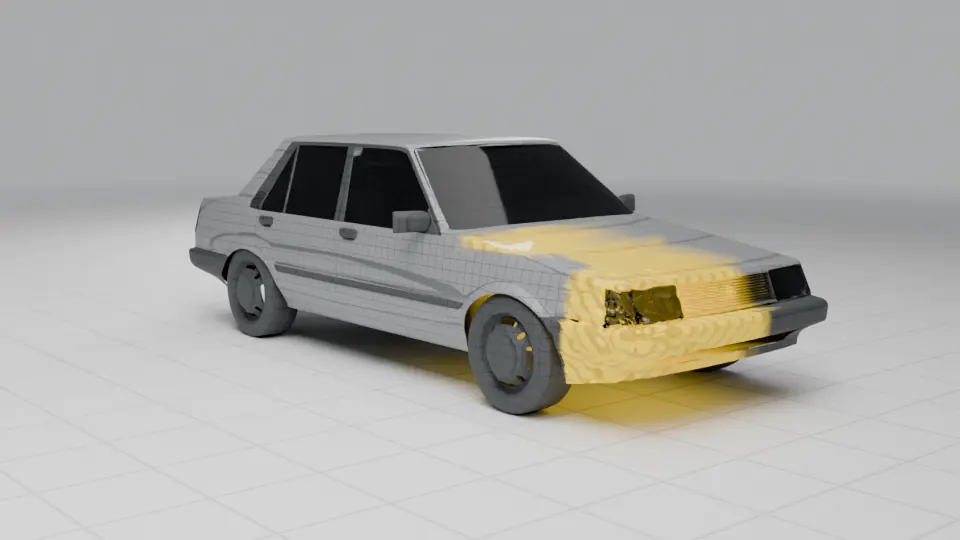
What fails most often
- 1 Engine and cooling 30% of all complaints
- 2 Tires 22% of all complaints
- 3 Powertrain 19% of all complaints
- 4 Seat belts 15% of all complaints
- 5 Equipment 4% of all complaints
- 6 Seats 4% of all complaints
- 7 Steering 4% of all complaints
- 8 Structure 4% of all complaints
- Engine and cooling: 8 complaints (30% of all).
- Tires: 6 complaints (22% of all).
- Powertrain: 5 complaints (19% of all).
- Seat belts: 4 complaints (15% of all), 1 of them with a crash reported by the owner.
- Equipment: 1 complaints (4% of all).
Engines and transmissions
US-market versions per EPA. On the right: how many NHTSA complaints name this engine or transmission type.
- 1.6 L · petrol · 4 cyl
- automatic, 3-speed
- automatic, 4-speed
- manual, 5-speed
Drive: FWD, AWD
Symptoms owners describe
How many of the 27 NHTSA complaints mention each symptom (automatic count from complaint text; one complaint can mention several).
Components owners complain about
| Component | Owner complaints | involving a crash | Technical service bulletins (TSB) |
|---|---|---|---|
| Engine and cooling | 8 | 0 | 0 |
| Tires | 6 | 0 | 0 |
| Powertrain | 5 | 0 | 0 |
| Seat belts | 4 | 1 | 0 |
| Equipment | 1 | 0 | 0 |
| Seats | 1 | 1 | 0 |
| Steering | 1 | 1 | 0 |
| Structure | 1 | 0 | 0 |
| Visibility | 1 | 0 | 0 |
| Other | 2 | 0 | 0 |
What owners report
Short excerpts of NHTSA complaints in the original wording. These are owner statements not verified by NHTSA; personal data removed.
Consumer was slowing vehicle down, then suddenly couldn't steer the vehicle, lost control and vehicle just wandered all over the road.
When rear ended the driver's seatback broke and driver lost control of the car.
Consumer not happy with service. The consumer purchased a custom hangar for her muffler. The consumer felt like the service was rendered in a false and misleading manner.
Although I have not had an accident, the seat belt (which attached to the door) does not retract at all. It has been like this for some time and would not protect me in an accident. I think this sort of seat belt device is defective and should be looked into!
Exhaust manifold is defective, driver can smell carbon monoxide in cab of vehicle. Consumer stated this is the 4th manifold, each one had cracks in the same place.
While driving down the road car jerked. Then it jerked again, and soon as consumer was able to get it off the road, transmission locked and vehicle stopped completely.
Sudden blow out, thread damage but sustained two sections of wall damage and had cracked inwall at bead area, second tire cracks in bead area
While driving on highway at 65mph heard a loud noise ,transmission locked up. Car skidded to halt on roadway. Had vehicle towed to a repair shop, and a rebuilt transmission was replaced. Mechanic said it was caused by the differential running out of fluid. The dip stick for the transmission fluid showed full.
When owners complained
NHTSA complaints by filing year. The peak shows at what age the problems show up most.
Comparison
By complaint count this model year ranks 7,189 of 36,656 model years in the NHTSA data (top 20% most complained about).
On average one model year of the Corolla has 222 complaints (53 years in the data). This year has 27, below average.
What to check before buying
- Engine and cooling. Radiator and fan after a frontal hit, coolant level and condition, overheating.
- Tires. Tire age by DOT code, bulges, wear pattern.
- Powertrain. Shift quality under load, harsh shifts, transmission codes, CV joints.
- Seat belts. Belt pretensioners after airbag deployment, SRS codes.
Other years of this model
- Corolla 19813 sources
- Corolla 19825 sources
- Corolla 19846 sources
- Corolla 19853 sources
- Corolla 19863 sources
- Corolla 198714 sources
- Corolla 198826 sources
- Corolla 198923 sources
- Corolla 199171 sources
- Corolla 199263 sources
- Corolla 1993130 sources
- Corolla 1994172 sources
- Corolla 1995176 sources
- Corolla 1996129 sources
- Corolla 1997135 sources
- Corolla 1998225 sources
- Corolla 1999155 sources
- Corolla 2000145 sources
- Corolla 2001133 sources
- Corolla 2002117 sources
- Corolla 2003721 sources
- Corolla 2004477 sources
- Corolla 2005854 sources
- Corolla 2006840 sources
- Corolla 2007836 sources
- Corolla 2008314 sources
- Corolla 20091,459 sources
- Corolla 20101,244 sources
- Corolla 2011584 sources
- Corolla 2012446 sources
- Corolla 2013201 sources
- Corolla 2014271 sources
- Corolla 2015220 sources
- Corolla 2016375 sources
- Corolla 2017313 sources
- Corolla 2018259 sources
- Corolla 2019355 sources
- Corolla 2020506 sources
- Corolla 2021359 sources
- Corolla 2022211 sources
- Corolla 2023198 sources
- Corolla 2024144 sources
- Corolla 202571 sources
- Corolla 202644 sources
- Corolla 999919 sources
Questions and answers
What are the most common problems with the 1990 Toyota Corolla?
Owner complaints to NHTSA most often mention: engine and cooling, tires, powertrain. Total complaints: 27. The most frequent symptoms in complaint texts: seat belts (11%), jerking, harsh shifts (4%), knocking, grinding or other noise (4%).
How many service bulletins (TSB) were issued for the 1990 Toyota Corolla?
NHTSA lists 0 manufacturer service bulletins for this year. A bulletin tells dealers how to diagnose or fix a known issue; it is not a recall.
Should I buy a 1990 Toyota Corolla from a US auction?
Owner complaints describe defects, not crash damage. Before bidding, check the components listed above and review the lot photos: VinWind builds a report of visible and hidden damage by VIN.
Other 1990 models
Read also
Sources: public NHTSA data (USA): service bulletins and owner complaints; YouTube: links to videos credited to their authors. Complaints are owner statements not verified by NHTSA, and describe defects rather than crash damage. Data updated 2026-11-05.