 AI Damage
Toyota Prius 2016: typische Probleme
Toyota Prius 2016. Halterbeschwerden bei der NHTSA: 180, am häufigsten zu Sicht und Elektrik. Service-Bulletins des Herstellers für dieses Jahr: 161. Details nach Bauteil unten, mit Quellen.
Kennzahlen
- Halterbeschwerden
- 180
- mit Unfall
- 13
- Technische Service-Bulletins (TSB)
- 161
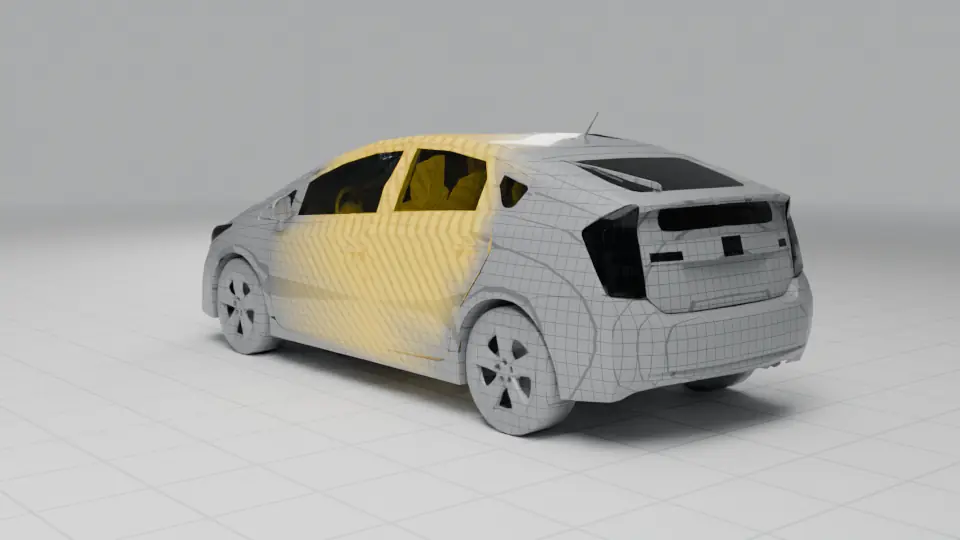
Was am häufigsten kaputtgeht
- 1 Sicht 24% aller Beschwerden
- 2 Elektrik 14% aller Beschwerden
- 3 Betriebsbremse 13% aller Beschwerden
- 4 Motor 11% aller Beschwerden
- 5 Geschwindigkeitsregelung 10% aller Beschwerden
- 6 Antriebsstrang 9% aller Beschwerden
- 7 Karosseriestruktur 7% aller Beschwerden
- 8 Airbags 6% aller Beschwerden
- Sicht: 43 Beschwerden (24% aller); Hersteller-Bulletins zu diesem Bauteil: 2.
- Elektrik: 26 Beschwerden (14% aller), davon 1 mit vom Halter gemeldetem Unfall; Hersteller-Bulletins zu diesem Bauteil: 48.
- Betriebsbremse: 23 Beschwerden (13% aller), davon 2 mit vom Halter gemeldetem Unfall; Hersteller-Bulletins zu diesem Bauteil: 4.
- Motor: 19 Beschwerden (11% aller), davon 1 mit vom Halter gemeldetem Unfall; Hersteller-Bulletins zu diesem Bauteil: 10.
- Geschwindigkeitsregelung: 18 Beschwerden (10% aller), davon 5 mit vom Halter gemeldetem Unfall; Hersteller-Bulletins zu diesem Bauteil: 2.
Motoren und Getriebe
US-Versionen laut EPA. Rechts: wie viele NHTSA-Beschwerden diesen Motor oder Getriebetyp ausdrücklich nennen.
- 1,8 l · Hybrid · 4 Zyl.
- stufenlos (CVT)
Antrieb: Frontantrieb
Symptome, die Halter beschreiben
Wie viele der 180 NHTSA-Beschwerden jedes Symptom nennen (automatische Zählung aus dem Beschwerdetext; eine Beschwerde kann mehrere nennen).
Bauteile, über die sich Halter beschweren
| Bauteil | Halterbeschwerden | mit Unfall | Technische Service-Bulletins (TSB) |
|---|---|---|---|
| Sicht | 43 | 0 | 2 |
| Elektrik | 26 | 1 | 48 |
| Betriebsbremse | 23 | 2 | 4 |
| Motor | 19 | 1 | 10 |
| Geschwindigkeitsregelung | 18 | 5 | 2 |
| Antriebsstrang | 16 | 0 | 0 |
| Karosseriestruktur | 12 | 0 | 28 |
| Airbags | 11 | 7 | 8 |
| Reifen | 9 | 0 | 2 |
| Kraftstoff/Antrieb | 7 | 0 | 0 |
| Fahrwerk | 5 | 0 | 0 |
| Räder | 4 | 0 | 1 |
| Außenbeleuchtung | 4 | 0 | 0 |
| Sitze | 3 | 1 | 2 |
Was Halter berichten
Kurze Auszüge aus NHTSA-Beschwerden im Original (Englisch). Aussagen der Halter, von der NHTSA nicht geprüft; persönliche Daten entfernt.
The contact's front driver's side seat backrest inadvertently moved backward, which caused her shins to hit the dashboard under the steering wheel during impact. None of the air bags deploy upon impact. The contact later received medical attention at the hospital for injuries to her shins. A police report was filed.
Seatbelt did not tighten either. I have contacted Toyota. Someone retrieved the data from recorder. I have a copy but it was to long to send with pics. Toyota claim # [XXX] (sorry for one pic I couldn’t delete) INFORMATION Redacted PURSUANT TO THE FREEDOM OF INFORMATION ACT (FOIA), 5 U.S.C. 552(B)(6).”
Airbags failed to deploy upon impact with guardrail. Drivers side front corner hit the guardrail at approx. 45% angle at 50-60mph. The vehicle was inspected by an insurance rep. and was deemed a total loss. The car is available for inspection.
During the incident the vehicle sustained significant damage to the front end and was destroyed but the air bags did not deploy. The front passenger sustained neck and back injuries which required medical treatment. A police report was taken at the scene and the vehicle was towed away.
Consumer writes in regards to unintended acceleration. The consumer the vehicle accelerated on it's own striking 2 vehicles.
After a few seconds, my car lurched forward with a sudden jerk, and I was able to exit, but this behavior (no movement, then sudden jerk) continued to happen. I was scared that I would get into an accident, so I pulled over and turned the car off and on. The behavior continued.
The contact stated that while the vehicle was on and running, the ABS and traction control warning lights illuminated, and the messages "Braking Power Low - Stop in a Safe Place”, “See Owner's Manual", "Braking Power Low - Visit the Dealer", and "ABS Malfunction - See Dealer" were displayed.
during ownership of car that brakes fail. Same problem as before Brake Actuator/Booster Failures: Multiple reports indicate issues with the ABS actuator or brake booster pump, leading to warning lights ("Braking power low", "ABS system malfunction").
Wann sich Halter beschwerten
NHTSA-Beschwerden nach Einreichungsjahr. Die Spitze zeigt, in welchem Fahrzeugalter Probleme am häufigsten auftreten.
Vergleich
Nach Anzahl der Beschwerden liegt dieses Modelljahr auf Platz 367 von 2.102 Modelljahren in den NHTSA-Daten (Top 17% der problematischsten).
Im Schnitt hat ein Modelljahr des Prius 37 Beschwerden (12 Jahre in den Daten). Dieses Jahr hat 180, also über dem Durchschnitt.
Was vor dem Kauf prüfen
- Sicht. Wischer, Spiegel, Entfroster, gesprungenes Glas.
- Elektrik. Alle Steuergeräte auslesen, Batterie und Lichtmaschine testen, Stecker nahe der Aufprallzone prüfen.
- Betriebsbremse. Pedalgefühl, ABS-Funktion, Undichtigkeiten, Scheiben und Leitungen.
- Motor. Kaltstart, ungewöhnliche Geräusche, Ölverlust und Motorcodes.
Service-Bulletins des Herstellers
Titel der Bulletins im Original (Englisch), wie bei der NHTSA eingereicht.
- OBSOLETE NOTICE August 20, 2026
This bulletin is now obsolete. Please see T-SB-0051-26.
- This bulletin includes basic procedures for performing a rescue charge at battery on high voltage (HV)…
This bulletin includes basic procedures for performing a rescue charge at battery on high voltage (HV) Ni-MH and Li-ion batteries.
- Some 2005 – 2026 Toyota vehicles that have undergone water intrusion may exhibit a condition in which a…
Some 2005 – 2026 Toyota vehicles that have undergone water intrusion may exhibit a condition in which a musty odor is present. Follow the procedures in this bulletin to remediate the odor and address this condition…
- Some customers may experience echoing on the line calling the vehicle when using Bluetooth Hands Free
This is caused by the phone Hands Free volume being too low.
- The air conditioning dye injection tool kit has been developed to aid in identifying the location of air…
The air conditioning dye injection tool kit has been developed to aid in identifying the location of air conditioning refrigerant leaks. The procedures outlined in this Service Bulletin aid in locating, inspecting, and…
- This bulletin includes basic procedures for performing a rescue charge at battery on high voltage (HV)…
This bulletin includes basic procedures for performing a rescue charge at battery on high voltage (HV) Ni-MH and Li-ion batteries. This bulletin should be used in conjunction with the applicable model and model year…
- The condition known as acid rain is caused by airborne chemicals or particles in the atmosphere, which mix…
The condition known as acid rain is caused by airborne chemicals or particles in the atmosphere, which mix with rainwater, nighttime dew, or high humidity to form acidic compounds. If these contaminants settle and…
- To prevent brake rotor rust from forming during transportation and storage, wheel film will be used…
To prevent brake rotor rust from forming during transportation and storage, wheel film will be used instead of a cardboard type of anti-rust cover. The purpose of the wheel film is to shield the disc brake rotor from…
- Acid rain results from rainwater or other airborne moisture that become acidic due to industrial chemical…
Acid rain results from rainwater or other airborne moisture that become acidic due to industrial chemical impurities in the atmosphere. If these acidic compounds settle on an exposed vehicle, especially the horizontal…
- Toyota vehicles are currently protected with RapgardTM protective film designed to protect the horizontal…
Toyota vehicles are currently protected with RapgardTM protective film designed to protect the horizontal painted surfaces. This material protects from acid rain, environmental fallout, and rail contamination. Follow…
- Vehicles may occasionally be subjected to contamination by airborne iron particles shed from railroad…
Vehicles may occasionally be subjected to contamination by airborne iron particles shed from railroad tracks, train wheels, exposure to heavy machinery facilities, grinding, welding, etc. This type of contamination can…
- Some 2005 – 2024 Toyota vehicles that have undergone water intrusion may exhibit a condition in which a…
Some 2005 – 2024 Toyota vehicles that have undergone water intrusion may exhibit a condition in which a musty odor is present. Follow the procedures in this bulletin to remediate the odor and address this condition…
Die NHTSA führt 161 Bulletins für dieses Jahr; hier die 12 neuesten.
Andere Jahre dieses Modells
Fragen und Antworten
Was sind die häufigsten Probleme beim Toyota Prius 2016?
Halterbeschwerden bei der NHTSA nennen am häufigsten: Sicht, Elektrik, Betriebsbremse. Beschwerden insgesamt: 180. Häufigste Symptome in den Beschwerdetexten: Warnleuchten, Motorkontrollleuchte (8%), Ruckeln, harte Schaltvorgänge (5%), Fenster, Schiebedach (4%).
Wie viele Service-Bulletins (TSB) gibt es für den Toyota Prius 2016?
Die NHTSA führt 161 Service-Bulletins des Herstellers für dieses Jahr. Ein Bulletin sagt Händlern, wie ein bekanntes Problem diagnostiziert oder behoben wird; es ist kein Rückruf.
Lohnt sich ein Toyota Prius 2016 von einer US-Auktion?
Halterbeschwerden beschreiben Mängel, keine Unfallschäden. Prüfen Sie vor dem Gebot die oben genannten Bauteile und die Fotos des Loses: VinWind erstellt per VIN einen Bericht über sichtbare und versteckte Schäden.
Andere Modelle von 2016
Lesen Sie auch
Quellen: öffentliche NHTSA-Daten (USA) – Service-Bulletins und Halterbeschwerden; YouTube – Links zu Videos mit Nennung der Autoren. Beschwerden sind Aussagen der Halter, von der NHTSA nicht bestätigt, und betreffen Mängel, keine Unfallschäden. Daten aktualisiert am 2026-11-04.