 AI Damage
Honda FIT 2019 : problèmes fréquents
Honda FIT 2019. Plaintes de propriétaires à la NHTSA : 136, le plus souvent pour système électrique et carburant/propulsion. Bulletins techniques du constructeur pour cette année : 22. Détail par organe ci-dessous, avec sources.
Chiffres clés
- Plaintes de propriétaires
- 136
- avec accident
- 9
- Bulletins techniques (TSB)
- 22
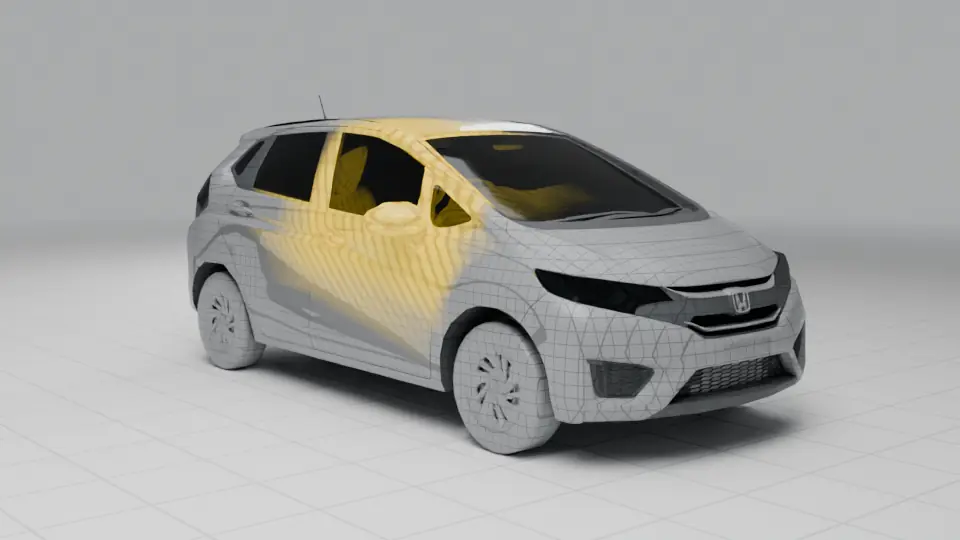
Ce qui casse le plus souvent
- 1 Système électrique 36% de toutes les plaintes
- 2 Carburant/propulsion 29% de toutes les plaintes
- 3 Moteur 12% de toutes les plaintes
- 4 Circuit de carburant 10% de toutes les plaintes
- 5 Structure 6% de toutes les plaintes
- 6 Anticollision avant 5% de toutes les plaintes
- 7 Maintien de voie 5% de toutes les plaintes
- 8 Direction 3% de toutes les plaintes
- Système électrique : 49 plaintes (36 % du total), dont 2 avec un accident signalé par le propriétaire ; bulletins du constructeur sur cet organe : 4.
- Carburant/propulsion : 40 plaintes (29 % du total), dont 2 avec un accident signalé par le propriétaire.
- Moteur : 16 plaintes (12 % du total), dont 1 avec un accident signalé par le propriétaire ; bulletins du constructeur sur cet organe : 1.
- Circuit de carburant : 14 plaintes (10 % du total) ; bulletins du constructeur sur cet organe : 6.
- Structure : 8 plaintes (6 % du total), dont 1 avec un accident signalé par le propriétaire.
Moteurs et boîtes
Versions du marché américain selon l’EPA. À droite : nombre de plaintes NHTSA qui citent ce moteur ou ce type de boîte.
- 1,5 L · essence · 4 cyl.
- à variation continue (CVT)cité dans 1 plaintes
- manuelle, 6 rapportscité dans 1 plaintes
Transmission : traction
Symptômes décrits par les propriétaires
Combien des 136 plaintes NHTSA mentionnent chaque symptôme (comptage automatique sur le texte ; une plainte peut en citer plusieurs).
Organes visés par les plaintes
| Organe | Plaintes de propriétaires | avec accident | Bulletins techniques (TSB) |
|---|---|---|---|
| Système électrique | 49 | 2 | 4 |
| Carburant/propulsion | 40 | 2 | 0 |
| Moteur | 16 | 1 | 1 |
| Circuit de carburant | 14 | 0 | 6 |
| Structure | 8 | 1 | 0 |
| Anticollision avant | 7 | 0 | 0 |
| Maintien de voie | 7 | 0 | 0 |
| Direction | 4 | 0 | 0 |
| Équipement | 3 | 0 | 6 |
| Airbags | 3 | 2 | 0 |
| Freins | 3 | 1 | 0 |
| Transmission | 2 | 2 | 1 |
| Régulation de vitesse | 2 | 2 | 0 |
| Contrôle de stabilité (ESP) | 1 | 0 | 0 |
Ce que disent les propriétaires
Courts extraits de plaintes NHTSA en version originale (anglais). Déclarations de propriétaires non vérifiées par la NHTSA ; données personnelles supprimées.
The first time, the contact stated that while driving at a low rate of speed, the vehicle independently lurched forward without warning before the vehicle corrected itself and resumed normal operation.
The contact stated that the airbags did not deploy. There was no warning light illuminated. The contact stated that there was severe damage to the passenger’s side and front of the vehicle. The contact stated that medical attention was not needed for anyone in either of the three 3 vehicles involved in the crash.
The vehicle started to bounce and accelerated on its own while making a left turn and was not responding to brakes to slow down and kept going faster and faster. The vehicle was only responding to steering.
Contact stated pulling into a parking spot with foot on the brake, slowing to a stop, when she was almost at a complete stop the vehicle inadvertently lurched forward. The vehicle collided with a cement pole in a parking garage. The air bags deployed as a result of the collision.
I was pulling into a parking spot with my foot on the brake, slowing a stop, when the car suddenly lurched forward. It felt like a sudden jolt which propelled the car over the parking spot curb and into a poll. This caused me to slam my foot even harder on the brake to stop the car.
Specifically, I am unable to view the available fuel level, odometer, remaining oil life, or trip mileage while driving.Safety Risk:The inability to monitor the vehicle’s remaining fuel level creates a severe and unpredictable safety hazard, as the vehicle could unexpectedly stall or lose power in high-speed traffic…
Nearly 10 months later, on XXX the following errors appeared on the dash: tire pressure monitor system, emissions, hill start assist, lane deviation warning, power steering, and vehicle stability assist errors on the screen, and the check engine, tire pressure monitoring system, vehicle stability assist system, and…
Screen with odometer, gas gauge, mpg, etc has been failing. Makes it difficult to get service and warranty coverage on repairs, tires, etc due to not knowing mileage at time of service. Also makes it difficult to know how much fuel is in the vehicle, with risk of running out of gas causing operation and safety issues.
Quand les propriétaires se sont plaints
Plaintes NHTSA par année de dépôt. Le pic montre à quel âge du véhicule les problèmes apparaissent le plus.
Comparaison
Par nombre de plaintes, cette année-modèle est 461e sur 2 102 années-modèles dans les données NHTSA (top 22 % des plus problématiques).
En moyenne, une année-modèle de FIT compte 91 plaintes (5 années dans les données). Celle-ci en compte 136, au-dessus de la moyenne.
À vérifier avant l’achat
- Système électrique. Lire tous les calculateurs, tester batterie et alternateur, contrôler les connecteurs près de la zone de choc.
- Carburant/propulsion. Odeur de carburant, fuites, fonctionnement irrégulier, codes du circuit carburant.
- Moteur. Démarrage à froid, bruits anormaux, fuites d’huile et codes moteur.
- Circuit de carburant. Odeur de carburant, fuites, fonctionnement irrégulier, codes du circuit carburant.
Bulletins techniques du constructeur
Titres des bulletins en version originale (anglais), tels que déposés à la NHTSA.
- Owner Notification Letter - On some 2018-2019 Fit vehicles, a combination of carbon deposits on the intake…
Owner Notification Letter - On some 2018-2019 Fit vehicles, a combination of carbon deposits on the intake valves and the PGM-FI software settings may lead to reduced combustion stability under certain circumstances…
- Service Bulletin - A combination of carbon deposits on the intake valves and the PGM-FI software settings…
Service Bulletin - A combination of carbon deposits on the intake valves and the PGM-FI software settings may lead to reduced combustion stability under certain circumstances. This results in a misfire being detected…
- Service Bulletin - The MIL comes on with DTC P0300 (random misfire detected) or P0301âP0304 (cylinder…
Service Bulletin - The MIL comes on with DTC P0300 (random misfire detected) or P0301âP0304 (cylinder misfire detected) due to carbon buildup on the intake valves may be affecting combustion.
- Dealer Message - American Honda is announcing a warranty extension for certain 2018-2019 Fit vehicles
American Honda is extending the warranty coverage for valve cleaning and software installation due to carbon buildup on the valves with misfire DTCs (P0300-P0304) on these vehicles to 10 years or 150,000 miles from the…
- Service Bulletin - (Repair Procedure Revision) Due to swelling of the fuel pump motor impeller, the fuel…
Service Bulletin - (Repair Procedure Revision) Due to swelling of the fuel pump motor impeller, the fuel pump may seize and stop working. If this occurs, the check engine light may be displayed with DTC P0087 (Fuel…
- Service Bulletin - (Repair Procedure Revision) Due to swelling of the fuel pump motor impeller, the fuel…
Service Bulletin - (Repair Procedure Revision) Due to swelling of the fuel pump motor impeller, the fuel pump may seize and stop working. If this occurs, the engine may not start, or the engine could stall while…
- "Service news article - When diagnosing a Fit within the above VIN range with a misfire complaint, start…
"Service news article - When diagnosing a Fit within the above VIN range with a misfire complaint, start by doing service bulletin, 21-007 (Carbon Buildup with Misfire DTCs) instead of replacing fuel injectors. These…
- Service bulletin - The MIL comes on with DTC P0300 (random misfire detected) or P0301âP0304 (cylinder…
Service bulletin - The MIL comes on with DTC P0300 (random misfire detected) or P0301âP0304 (cylinder misfire detected). Carbon buildup on the intake valves may be affecting combustion.
- Service Bulletin - The MIL comes on with DTC P0300 (random misfire detected) or P0301-P0304 (cylinder…
- ServiceNews Article - When diagnosing a Fit within the above VIN range with a misfire complaint, start by…
ServiceNews Article - When diagnosing a Fit within the above VIN range with a misfire complaint, start by doing service bulletin 21-007 (Carbon Buildup with Misfire DTCs) instead of replacing fuel injectors. These…
- Dealer Message - Released on April 30th, service bulletin 21-007 addresses random or single-cylinder…
Dealer Message - Released on April 30th, service bulletin 21-007 addresses random or single-cylinder misfire concerns on 2015-2020 Fit models. Part of the corrective action involves cleaning the intake ports of any…
- "ServiceNews Article - If normal troubleshooting suggests replacing the fuel injectors, check the…
"ServiceNews Article - If normal troubleshooting suggests replacing the fuel injectors, check the long-term fuel trim using the i-HDS to ensure that it's fixed right the first time. -If it is less than 1.0% (lean)…
La NHTSA recense 22 bulletins pour cette année ; voici les 12 plus récents.
Autres années de ce modèle
Questions et réponses
Quels sont les problèmes les plus fréquents du Honda FIT 2019 ?
Les plaintes de propriétaires à la NHTSA citent le plus souvent : système électrique, carburant/propulsion, moteur. Total des plaintes : 136. Symptômes les plus fréquents dans les plaintes : voyants, témoin moteur (29%), circuit carburant, odeur d’essence (18%), cale en roulant (8%).
Combien de bulletins techniques (TSB) pour le Honda FIT 2019 ?
La NHTSA recense 22 bulletins techniques du constructeur pour cette année. Un bulletin indique aux concessionnaires comment diagnostiquer ou corriger un problème connu ; ce n’est pas un rappel.
Faut-il acheter un Honda FIT 2019 aux enchères américaines ?
Les plaintes décrivent des défauts, pas des dégâts d’accident. Avant d’enchérir, vérifiez les organes listés ci-dessus et les photos du lot : VinWind établit un rapport des dégâts visibles et cachés par VIN.
Autres modèles 2019
À lire aussi
Sources : données publiques NHTSA (États-Unis) – bulletins techniques et plaintes de propriétaires ; YouTube – liens vers des vidéos avec mention des auteurs. Les plaintes sont des déclarations de propriétaires non vérifiées par la NHTSA et concernent des défauts, pas des dégâts d’accident. Données mises à jour le 2026-11-04.